Vote on November 6. But don’t forget that there is something much bigger than your vote, Thank God!

Image result for how the nations rage

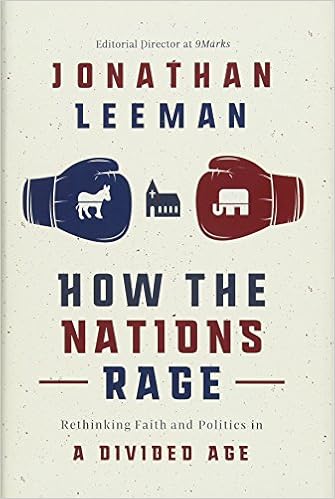
my favorite quotes by Jonathan Leeman’s book have been helpful for me:

Chapter 1A Nation Raging, A Church Unchanging

“Paul asked the Jews of his day, ‘You who preach against stealing, do you steal?’ (Rom. 2:21). I’ve got a few questions of my own: You who call for immigration reform, do you practice hospitality with visitors to your church who are ethnically or nationally different from you?

You who vote for family values, do you honor your parents and love your spouse self-sacrificially?

You who speak against abortion, do you also embrace and assist the single mothers in your church? Do you encourage adoption? Do you prioritize your own children over financial comfort?

You who talk about welfare reform, do you give to the needy in your congregation?

You who proclaim that all lives matter, do your friends look like you?

You who lament structural injustices, do you work against them in your own congregation? Do you rejoice with those who rejoice and weep with those who weep?

You who fight for traditional marriage, do you love your wife, cherishing her as you would your own body and washing her with the water of the Word?

You who are concerned about the economy and the job market, do you obey your boss with a sincere heart, not as a people-pleaser but as you would obey Christ?

You who care about corporate taxes, do you treat your employees fairly? Do you threaten them, forgetting that he who is both their Master and yours in heaven and that there is no partiality with him?” (pg. 16)

“I love how my church’s senior pastor Mark put it: “Before and after America, there was and will be the church. The nation is an experiment. The church is a certainty.” (pg. 17)

Chapter 3  – Heart: Not Self-Exalting, But Born Again And Justified

“Good governments and righteous civil societies are good things, just like marriages and jobs are good things. Still, at the risk of sounding cliché, you have to let America go. Give it back to God. He might take it away. He might give it back. You will be okay either way if you have him. That doesn’t mean you stop working for the nation’s good. With or without the world’s favor, we can practice true righteousness and justice and glory and joy now. With or without the world’s favor, we can have assurance that – precisely at his chosen time – the kingdom of the world will become the kingdom of our Lord and he will reign forever and ever” (Rev. 11:15). (pg. 73)

Chapter 5 – Government: Not A Savior, But A Platform Builder

“Now, I do think Winston Churchill was right when he said, ‘democracy is the worst form of Government except for all the other forms that have been tried.’ Yet keep in mind that I’m drawing these Churchillian convictions out of the wisdom bucket, not out of the biblical law bucket. For a democracy to work, the right kind of political culture must be in place. There must be a strong tradition of respecting the rule of law. Citizens must prize honesty and eschew bribes . . .” (pg. 123)

Chapter 6 – Churches: Not Lobbying Organizations, But Embassies of Heaven

“A Church is and is not a political threat . . . yes, Christians and churches are a threat to the stability of a Roman (or American) way of life; but no, they are not out to provoke civil strife. Yes, the presence of Christians in a society will prove to be bad for businesses based on wickedness and idolatry; but no, mobs of church members will not tear down temples, shops, and networks. Yes, churches will challenge the idols and false gods that prop up every government, whether the gods of the Roman Empire or the gods of the secular West; but no, they don’t try to overthrow the state. Churches both are and are not a political threat to the civic order. ” (pgs. 138-39)

“Once again, the church’s most powerful political word is the gospel. And the church’s most powerful political testimony is being the church.” (pg. 161)

Chapter 7 – Christians: Not Cultural Warriors, But AmbassadorsImage result for sisyphean

“We need to remember that politics in this world will always be Sisyphean. Do you remember Sisyphus? He was the king in Greek mythology who was condemned by the gods to roll an immense boulder up a hill, watch it roll down, and then repeat the act for eternity. So it is with our political accomplishments in this world. Build the freest nation in the world, and then watch it enslave its subjects, abort its babies, or maybe even persecute Christians. Down the hill the boulder rolls. The Wilberforce stories inspire the soul, but don’t forget the realities and upside-down judgments of Ecclesiastes either: “I saw under the sun that in the place of justice, even there was wickedness.” (3:16). “He who quarries stones is hurt by them, and he who splits logs is endangered by them” (10:9). (pg. 171)

Chapter 8Justice: Not Just Rights, But Right

“I don’t know if America’s divisions today are run of the mill or if the nation stands on the precipice of a cataclysmic division, where rule of law gives way. My own instinct is that our nations’ relative wealth masks the depth of division. If the economy were to collapse, we would discover what the country is really made of. Either way, do you think America possesses the tools to heal its divisions? It depends on where we look for justice.” (pg. 203)

“What do you think: Is our national vision statement on justice enough to heal our national divisions? Do we just need someone to repeat the Gettysburg Address? Or let me sharpen the question: Can you and I, no matter which gods we worship, justly govern ourselves together based merely on a shared commitment to the principles of freedom, equality, and individual rights? Can three hundred million of us do that? I think the answer is no. Apart from a fear of God, the hope of the Declaration and Gettysburg is a misplaced hope for a nation. Christians should not merely be interested in equality, liberty, and individual rights, but in a just equality, a just liberty, and a just set of rights, as God defines just.” (pg. 205)

“True justice doesn’t start with our rights. It starts with God’s righteousness and his understanding of what’s right. We do justice by doing what’s right, which includes respecting people’s rights. First right, then rights. The order is crucial. What God says is right is the root; rights are the flower . . . eventually those flowers will shrivel and die. “I have a right to an abortion.” “I have a right to my prejudices and my hate.” “I have a right to marry whomever I please.” Really? Says who? When we disregard what God says is right, then anyone can say which rights are right and which aren’t. There is no rebuttal. There is no public and accepted righteousness or standard of right. Rights are wonderful gifts when a society is virtuous, possessing a godly standard of right. Less so when it becomes unvirtuous.” (pg. 217)

“God’s common grace grants many a nation better than it deserves, but I have little confidence that America will long remain strong, prosperous, and free without any concept of God’s righteousness and justice somewhere in the background. That’s not because I believe in a civil prosperity gospel: obey God and the nation will be blessed as his chosen people. It’s because I believe the way of God’s righteousness and justice is the way of wisdom. And prosperity and flourishing ordinarily come to the wise. The nation can be strong apart from God’s righteousness, like a totalitarian state is strong. Or it can be “free,” in some impoverished and mangy sense of that word, like a stray dog is free. But it won’t be both.”

Final Thoughts: Why the Battle Might Get Worse, but Our Political Hopes Can Remain Unchanged, Untroubled, Untouched

“Which brings me back to healthy churches. If there is hope for the nation, it’s through the witness and work of churches. Our congregations have the opportunity to live transformed lives as a transformed culture through a transformed politics in their own fellowships right now – all for God’s glory and our neighbors’ good. And we will become such heavenly outposts when we focus first not on the public square, but on preaching the Word and making disciples. Together those disciples must grow up to maturity, into Christ, as each part does its work (Eph. 4:13-16). The resonant effects in the home, the marketplace, the public square, and the rest of life then follow. God does not intend to display his own justice and righteousness and wisdom through the wise, noble, and powerful things of this world, but through the foolish, weak, and despised things. He means to magnify himself not primarily through the US Congress, the New York Times editorial page, or Ivy League philosophy departments, but through Brother Bob, Sister Sue, and Deacon Darnell down at Bumblestew Baptist. Oh, nations of the earth, watch those three gather in Jesus’ name to see the way of God’s justice and mercy. They are God’s salt and light for you. Do you sense something distinct in them? See something bright? They are far from perfect, to be sure. But their King is perfect. And their lives together should offer you the first taste of his kingdom.” (pg. 238-39).

From a former Judge of the SCOTUS

Image result for scotus meaning

“God assumed from the beginning that the wise of the world would view Christians as fools…and He has not been disappointed. Devout Christians are destined to be regarded as fools in modern society. We are fools for Christ’s sake. We must pray for courage to endure the scorn of the sophisticated world. If I have brought any message today, it is this: Have the courage to have your wisdom regarded as stupidity. Be fools for Christ. And have the courage to suffer the contempt of the sophisticated world.”

– Supreme Court Justice, Antonin Scalia, 1936-2016

And as Romans 1:16-17 assumes, that the world believes that lovers of Christ ought to be ashamed of the gospel, since the gospel reveals the righteousness of God to both punish sin and forgive sin, through Christ, we must still say, “For I am not ashamed of the gospel, for it [the proclaimed gospel of Jesus Christ] is the power of God for salvation to everyone who believes, the the Jew first and also to the Greek. For in it [the proclaimed gospel of Jesus Christ] the righteousness of God is revealed by faith from first to last, as it is written, ‘The righteous shall live by faith.'”

And that means whatever happens this week in the American Democracy, those who have been called to belong to Christ (1:6) will still live by faith in the promises of God to exalt his Son as King over all the earth (1:3-4). Let us pray for our earthly country so that there may be peace and justice for all, especially for those whose hearts beat just inches away from the world that they are attempting to immigrate to.

Would you attend a church that advertised this? “Colored folk meet at the 8:00 am service; White folk meet at the 10:00 am service.”

Image result for segregation

Let’s try a few more, shall we?

“Males meet at 8 am and Females meet at 10 am”.

“Vegetarians meet at 8 am and Meat-eaters at 10 am.”

“Those who make less than 50k per year meet at 8 am and those who make more, meet at 10 am.”

“Democrats meet at 8 am; Republicans meet at 10 am.”

I ask again, would you attend a church that publicly advertised and implemented any of the above? Are you sure you would not attend a church that intentionally divided its congregation over any kind of preference? Let’s try one more then:

“Traditional Service at 8:00 am; Contemporary Service at 10:00 am”.

Bear with me if this has already got your temperature to rise a bit and that Harvard Lawyer in your mind is belting out defenses.

Since we know that God wants his people to gather together in unity (Eph. 4:1-6), while allowing diversity over gender (1 Cor. 12:12), food preferences (Rom. 14), economic status (James 2:1-4), political preferences and opinions (Rom. 14:1-2), and ethnicities from around the world (Rev. 5:9-10), God also wants unity in diverse singing and styles of music. Let scripture be our guide and not church-growth platitudes:

Colossians 3:16

“Let the word of Christ dwell in you richly, teaching and admonishing one another in all wisdom, singing psalms and hymns and spiritual songs, with thankfulness in your hearts to God.”

Ephesians 5:18-21

“And do not get drunk with wine, for that is debauchery, but be filled with the Spirit, addressing one another in psalms and hymns and spiritual songs, singing and making melody to the Lord with your heart, giving thanks always and for everything to God the Father in the name of our Lord Jesus Christ, submitting to one another out of reverence for Christ.”

The Psalms and Revelation

Psalm 90 was written by Moses, 400 years before David wrote Psalm 103. In David’s time, (about year 1,000 B.C), Psalm 90 would be considered a classic hymn by that generations’ standards. But Psalm 103 for example, would be a contemporary song. And clearly by reading the words and the meter of each different psalm, respectively, we would probably expect to hear a difference in how each particular song was played; one more slow and meditative, the other more enthusiastic and faster. Furthermore, Revelation 5:9 says that one day all the people of God will sing a “new song” –  in the Resurrection! I hope that the “traditional/classical” minded of the Church won’t sit out on that. And I hope that the “contemporary/modern” leaning won’t sit out when the Baldwin-Bach-Beethoven pipe organs belt out, “Hallelujah! Salvation and glory and power belong to our God, for his judgments are true and just; for he has judged the great prostitute who corrupted the earth with her immorality, and has avenged on her the blood of his servants” (Rev. 19:1-2).

What we see from scripture (not the church-growth gurus), is that when the church gathers to sing, it should sing a variety of songs that have a different sound, style, and genre (by God’s grace at our church, we use a few organ settings, piano, acoustic guitar, mandolin, flute, violin, banjo, bongo and conga drums, and percussion box; we use the best of the classics and the best of modern songs with every kind of sound possible, at least to our meager musical abilities, and never, never, never split up our congregation over music preferences). Even if we don’t exactly agree on what a psalm, hymn, or spiritual song sounds like, we must agree with the scriptures that there is to be a variety of different songs and sounds in worship. The “one another” of the scriptures means that older people who might prefer the classics need to learn to appreciate/sing with the younger generation; likewise, the younger, more contemporary leaning in the church need to learn to appreciate/sing with the older generation.

This also means that a church should not get trapped in a southern-gospel sound where every song feels like a high-school football pep rally on a Friday afternoon in the gymnasium. Or, where every song feels and sounds like you’re attending a black-and-white tie and gown to hear the best orchestra in the state. Or, where every song feels like you’re attending a quiet meditation where minor keys and thoughtful eyes gaze at the floor. Worship should incorporate all of this!

What is at stake?

When pastors and worship leaders pander to preferences over music instead of teaching and obeying scripture, people will have another reason to come into worship and expect their preferences to be met, or else the Leadership will hear the threat, “I’ll leave.” (BTW, the sinful heart is inherently segregated against others who are different.) As a preaching and worship pastor and musician in corporate worship for nearly a total of 40 years, I’ve had the “or else” thrown at me many times. But if we really care about people and about honoring our Lord Jesus Christ, then we’ll not succumb to the idolatry of , “give me my brand of worship or I’ll go somewhere else.”

Image result for segregation

Here is a helpful guideline for what the worship of the Risen Savior Jesus Christ should sound like on Sunday Morning, according to the above scriptures:

God’s Word teaches:

  1. The lyrics are to reflect what scripture teaches.
  2. There should be variety of style and sound in the songs.
  3. The songs are to be sung to God who sent his son Jesus Christ.
  4. The songs are to be sung to other believers in Christ.
  5. The songs are for all people groups in Christ throughout the ages.
  6. All the songs are for all lovers of Jesus Christ, not just for a particular sub-group within the church.

And therefore,

The Church is not to be segregated in its worship over ethnicity, gender differences, cultural differences, vocation/economic differences, food preferences, or music preferences. When a local congregation is divided and meets at different times over any kind of personal preference, then the gospel to all people groups, in all times, places, and circumstances, is dishonored in the church and implies that Jesus can be restructured to fit ones’ personal taste.

Bottom Line:

You can’t cut and dice Jesus to suit you. Rather, He binds and heals the divisive, segregated, and “my preferred musical experience” minded folk, to join him in multi-sound-surround worship at his Throne. That’s where this is all headed – whether you prefer it or not. I hope you do!

Our Monday Morning Prayer, 9-10-18

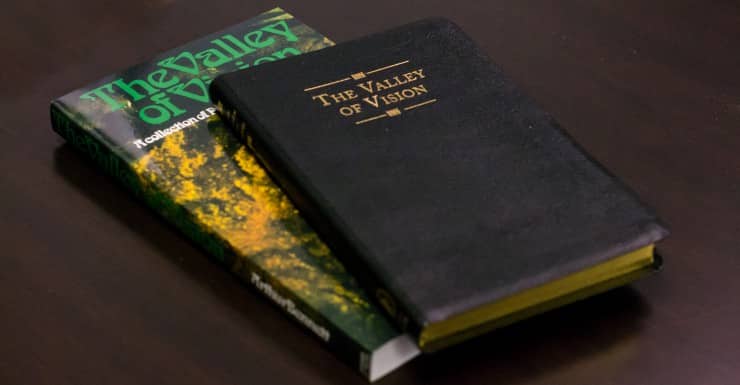
Image result for valley of vision puritan prayersFrom time to time we use The Valley of Vision: Puritan Prayers & Devotions for corporate worship. It was compiled and put together for the church to use these prayers from the puritans who lived in the 17 and 18oo’s. This one is titled, “Love”. Join me this morning for prayer:
Lord Jesus,

Give me to love thee, to embrace thee,

though I once took lust and sin in my arms.

Thou didst love me before I loved thee,

an enemy, a sinner, a loathsome worm.

Thou didst own me when I disclaimed myself;

Thou dost love me as a son,

and weep over me as over Jerusalem.

Love brought thee from heaven to earth,

from earth to the cross,

from the cross to the grave.

Love caused thee to be weary, hungry, tempted, scorned, scourged, buffeted, spat upon, crucified, and pierced.

Love led thee to bow thy head in death.

My salvation is the point where perfect created love

and the most perfect uncreated love meet together;

for thou dost welcome me,

not like Joseph and his brothers, loving and sorrowing, but loving and rejoicing.

This love is not intermittent, cold, changeable;

it does not cease or abate for all my enmity.

Holiness is a spark from thy love

kindled to a flame in my heart by thy Spirit,

and so it ever turns to the place, from which it comes.

Let me see thy love everywhere, not only in the cross, but in the fellowship of believers and in the world around me. When I feel the warmth of the sun may I praise thee who art the Sun of righteousness with healing power. When I feel the tender rain may I think of the gospel showers that water my soul.

When I walk by the river side may I praise thee

for that stream that makes the eternal city glad,

and washes white my robes

that I may have the right to the tree of life.

Thy infinite love is a mystery of mysteries,

and my eternal rest lies in the eternal enjoyment of it.

Oh The Deep, Deep Love of Jesus

One of our congregational songs for this Sunday, September 9, 2018. Are you weary dear saint? Are you fearful that your weariness is too much for Christ to bear? Doubt no longer on how much your Father in heaven loves you and grieves with you. Look to the Cross of Christ and see the deep deep love of Jesus.


How to Respond to the question, “How could God allow (evil description)”?

Image result for sharing the gospel
I was recently asked this question by a lady in our church because this is the question that she received from someone that she cares about, and someone that she wants to share the gospel with. Below is in part my response to this question and how to share the gospel based on 1 Peter 3:15. 
Evil in the world has always been one of the top reasons that people object the gospel.
Keep in mind that there is a difference between the words, “good” and “humans made in the image of God”. It is true that the Jews and the Polish and the Russians were innocent of any wrong doing, but they were not “good” as you put it. I know what you mean by describing the millions that was murdered by Mussolini, Stalin, and Hitler, but your “defense” should never include the word “good” – because there is no one who is good. I never allow my “opponent” of the gospel to describe people as good. Jesus said in Luke 18:19 – there is no one who is good except God.
That said, it will help your dialogue to frame arguments in this sense: bad things happen to sinful people, because that’s the only kind of people there are on the earth, even if they are innocent of personal wrongdoing.
So here are three ways that I respond, depending upon the nature of the discussion:
1. If God were to leave men alone in their sinful desires (Rom. 1), and they end up murdering innocent people, then that is not God’s fault. Cain murdered his brother Abel and Jesus says that murder is “of the devil” (John 8:31ff). The Holocaust and other horrible acts of genocide is the consequence of God leaving man alone in his sinful desires. What the world needs is the Lord’s restraining hand to hold men back from being so evil. But God does not have to mercifully hold men back from being so evil. In his judgement, he lets them go.
2. There is no greater act of horror ever committed against a human being than the murder of Jesus Christ. And that lawless, sinful act was also God’s plan from the foundation of the world to pay for my sins (Acts 2 and 4). I don’t have all the answers to why God allows such horrible evil to flourish, but I do see the Cross of Christ, both absolutely wretched and absolutely wonderful at the same time. When I have doubts and confusion over what God is up to in allowing and using evil to accomplish his purposes (Genesis 47, 50), I keep my eyes on the Cross. The Cross makes sense to me. And so if the Cross makes sense then I can accept the things that don’t make sense and wait for the END to come to clear up my mind.
But this is how I get to the gospel:
3. What is the Holocaust and other acts of violence against mankind? Is it not at it’s very beginning just one person who does not love his neighbor? Adolf Hitler was once a 10 year old boy working his abusive father’s farm and tending the bee hives for honey! And what if God were to take his restraining hand off of that person – what violence is capable 10 years down the road? Have you ever been unloving to someone? Have you ever mistreated anyone? Have you ever hated someone, cursed someone, taken advantage of someone, verbally or physically wounded someone? Then are you not also guilty of what you condemn in others? When it comes to Jesus’ command to “love your neighbor as yourself,” are you innocent and Hitler guilty?
With this last point, now I can share the gospel because the good news is for everyone, that’s because everyone is guilty before God, not just the really mean ones. Everyone sins. Everyone needs a Savior. Everyone needs Jesus.

Come Behold the Wondrous Mystery

Introducing this beautiful song to our church on September 16. Yes, a little over-due,  since it came out in 2013. But just in case you have not heard this, Enjoy!

VERSE 1
Come behold the wondrous mystery
In the dawning of the King
He the theme of heaven’s praises
Robed in frail humanity

In our longing, in our darkness
Now the light of life has come
Look to Christ, who condescended
Took on flesh to ransom us

VERSE 2
Come behold the wondrous mystery
He the perfect Son of Man
In His living, in His suffering
Never trace nor stain of sin

See the true and better Adam
Come to save the hell-bound man
Christ the great and sure fulfillment
Of the law; in Him we stand

VERSE 3
Come behold the wondrous mystery
Christ the Lord upon the tree
In the stead of ruined sinners
Hangs the Lamb in victory

See the price of our redemption
See the Father’s plan unfold
Bringing many sons to glory
Grace unmeasured, love untold

VERSE 4
Come behold the wondrous mystery
Slain by death the God of life
But no grave could e’er restrain Him
Praise the Lord; He is alive!

What a foretaste of deliverance
How unwavering our hope
Christ in power resurrected
As we will be when he comes

What a foretaste of deliverance
How unwavering our hope
Christ in power resurrected
As we will be when he comes

– Matt Boswell, Michael Bleecker, Matt Papa 2013

How a Willow Switch Protected a Blueberry Delight

Image result for willow branch

I was about 12 years old when spending more and more days and nights with my grandma Hall (my mom’s mom) became common: dad was very sick and mom sent me to grandma’s house so that she could be away at the hospital with dad or in the summertime, put in an 8 hour day at work.

One late summer day with grandma baby-sitting several of her grandchildren, she specifically said to me, “don’t go past the curve or I’ll give you a good switch’n. I don’t want you kids ran over – I want to be able to see you from the house.” She was wise enough to know that I was always the ring-leader of outlaw behavior. It seemed that whatever I did, the rest would follow, for good or bad. Grandma was not being fussy: the one-lane twisting road to her house was full of blind spots for cars to run over playing children. She wanted us to stay close to the house.

One day when several of my cousins and I were playing near the curve, I led the whole pack of us past the curve, down a straight-away past the “creepy house” and into the next curve so that we could slide down the embankment on our rears. We were muddy and having a blast. Then I looked up. There she comes down the road at us – at me, with a willow branch in her hands (one of the worst sounds in the world is your grandma stripping the leaves off a willow branch: phft, phft, phft, phft!!!). The next thing I remember is feeling the stinging, needling, expertise of a grandma’s switching method on my legs. Later on in life I came to love her for it. You know why?

Image result for blueberries

You see, across the creek in her back yard was that willow tree where those nasty discipline branches grow, but just behind the tree up the hillside were several blueberry bushes. And in late July, early August, she and I would pick blueberries together, all alone just the two us. Grandma was so fun to be around and she truly enjoyed my presence. We’d wash them off. She’d put them in a bowl of cold milk, sprinkle some sugar in the bowl, and we’d sit at her L – shaped counter across from each other talking and enjoying our favorite dessert. I believe she loved me so much that she was willing to bring some temporary pain to my legs in order to protect me from getting injured or killed, so that . . . we could spend wonderful afternoons together enjoying a blueberry delight. 

It’s part of what it means to be human: anything worth enjoying in this life will take a stern resolve to oppose whatever threatens your joy. This is why our Lord will discipline his children (Hebrews 12:7-11; 1 Peter 1:6-9), in order to protect our walk with him.

This life is painful. You can either suffer and never know the purpose or meaning behind your suffering. Or, you can follow the Lord and be sure that every sorrow that is permitted into your life is to protect your eternal joy. I had a grandma who taught me that, and I am grateful.

“We’re going on an Adventure”


IMG_4341

Children are notorious for calling it the way they see it, literally. Though they can role-play all kinds of imaginary figures, their imagination is grounded in concrete terms. I was startled recently by what one of my grandsons asked me. I’ll set it up for you.

Ever since Joseph (now 6) and Gabriel (now 5) were able to walk I would take them on “an adventure.” Using language of anticipation, awe, and excitement, I would take them on an adventure into the woods or some other place where I could fascinate their minds and senses. Over time they came to frequently ask with wide eyes, “grandpa take us on another adventure.”

A few weeks ago we were in West Virginia visiting my mom; Joey and Ashley were with us, and their three boys. It was time to go on an adventure on my dad’s four wheeler. I decided to show the boys my most favorite spot: directly behind my parents home through the woods, about a half mile, is what has come to be known as Pirates Cove on Summersville Lake. I first saw this sight when I was seven; my uncle Benny brought me to this cliff and I was mesmerized by the beauty, and the height. So, with excitement and anticipation in my voice, I began telling the boys as we headed out that I was going to give them a great adventure into the woods four-wheeling to “one of the most beautiful places that you’ll ever see.”

Image result for summersville lake

We got as close as we could to the cliff, parked the four wheeler and began the final 100 yard walk through the woods to this majestic edge that overlooks the lake. Getting closer to where you could just barely see blue sky through the leaves, I stopped and got down on the boys eye level and asked with excitement, “What do you hear?” Gabriel and Joseph both said, “I hear people laughing.” I responded, “That is right.” This cove is famous for cliff diving, photo-ops, and hanging out on boats, anchors away! But then I asked, “What else do you hear?” Joseph spoke up like he discovered a secret treasure, “I hear water.” It’s a beautiful sound to hear in the thick of the woods as the water from the streams flow over one of the cliffs, splashing 60 feet down onto the blue water. About this time the boys were completely and fully alert for something spectacular. “Are you ready to see something wonderful?,” I asked. They both just stood there grinning from ear to ear shaking their heads up and down with approval. I stood up and we began the last 30 yards or so. Then, Gabriel grabbed my arm and stopped me and said . . .

Remember what I said about a child’s ability to concretely, literally, say it like they see it? What came out of his mouth made me speechless. With eyes now wider than ever and with the kind of joyful anticipation that only a person would express when you really believe that you’re about to come into something truly breath-taking, he said, “Are we going to see your dad?!?!?”

Joseph’s eyes and mouth opened even wider now. My eyes filled with water and I was stunned into silence and amazement that Gabriel thought I was taking them into heaven to see my dad. They knew something was strangely odd about the sounds and sights ahead, and for Gabriel, the only natural thing that could explain the echoing of water and laughter was heaven, and the sight of my dad, their great grandpa.

The only natural explanation for the desire of eternal life that you feel deep inside of you is that heaven is real because Jesus is real. I’ll never forget this time with my grandsons and I’ll never let them forget it. The greatest adventure is ahead of us . . . as Jesus said, where nothing can ever steal our joy again (Matthew 6:19-21).

What did I say to Gabriel’s question that was filled with excitement and hope?

Taking a deep breath as if now this rock cliff and lake will not measure up,

“Not yet – not today.”